calissa: A low angle photo of a book with a pair of glasses sitting on top. (Mt TBR)


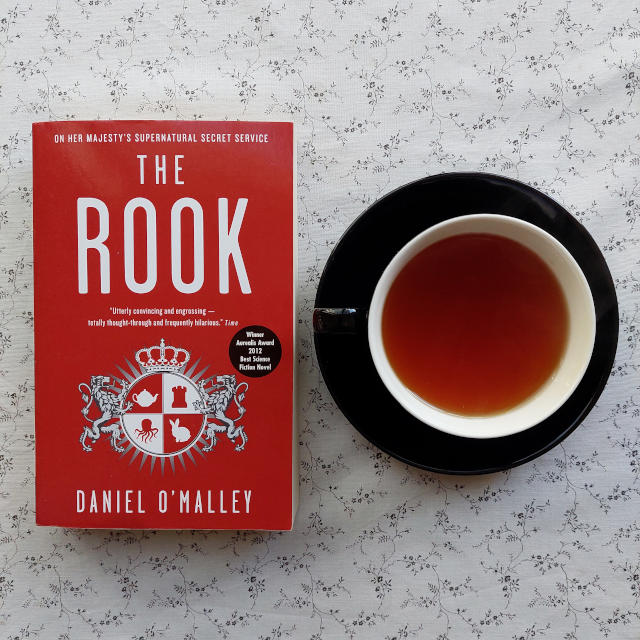
The Rook by Daniel O’Malley had been languishing on my Mt TBR for some time when the TV series was released. I watched the first season, or maybe part of the first season, before eventually wandering off to shinier shows. More recently, I dusted off the book because it fit a prompt for last year’s Magical Readathon and I figured I’d be able to skim through it fairly quickly since it didn’t seem all that interesting.

Friends, I have learned my lesson once again: always read the book first. It turns out the TV show took itself way too seriously, added some distasteful elements for drama and completely murdered the tone of the book.

Myfanwy Thomas wakes up in a London park with no memory of who she is and surrounded by bodies wearing latex gloves. In her pocket, she finds a letter from her former self offering her a choice: flee and start a new life, or return to the supernatural organisation she worked for and discover who has betrayed her.

The Checquey is rather like if the X-Men ran MI5. All of the top level members (named after chess pieces) have supernatural powers, including Myfanwy. But Myfanwy’s real superpower is a gift for administration. This delighted my heart in so many ways. In fact, the beginning annoyed me a bit with the way the old Myfanwy was so amazingly organised — leaving letters and binders full of information on her life — while the new one seemed more bumbling and reactive. However, her bewilderment makes it all the more satisfying as she grows into her powers, both supernatural and personal.

The letters and binder the old Myfanwy has prepared makes for a smart, plot-relevant way of info-dumping. The reader gets to learn about the people and organisation along with the new Myfanwy. As the book progresses and there’s less need for explanation, these morph more into a diary, giving us a glimpse into the old Myfanwy’s life and the predicament in which she found herself. It becomes a clever way to offer more pieces of the puzzle. Because the heart of the novel is a mystery: who has betrayed Myfanwy and why?

While this heart is very genuine, the story is also very tongue-in-cheek. Myfanwy’s organisational powers are definitely part of this. It amused me how Myfanwy never picked up on the way the underlings around her were terrified of her as a stickler for procedure and protocol. There was also a lot more slime and tentacles than you’ll see in James Bond (and the TV series; why, oh why did they cut that out?). Some of the villains also played with James-Bond-style tropes in a way that was very entertaining.

Another big strength of the book was the relationships between the female characters. It’s hard to say much here without giving spoilers, but I appreciated the variety in the relationships between the women and how they were never in competition. It was also a delight to see multiple competent women at work. And while Myfanwy is not exactly the celibate type, her focus is most definitely her career and not her love life; there was no romance shoehorned in.

In conclusion, I’m immensely relieved that I didn’t let the TV series talk me into unhauling The Rook without reading it first. I would have missed out on a smart, funny book that was an absolute delight. I’m very happy I have the sequel on hand… and that a third in the series is scheduled for release later this year.

Published: January 2012 by HarperCollins
Format reviewed: Paperback, 484 pages
Series: The Checquey Files #1
Genres: Science fiction
Source: Dymocks
Available: Abbey’s ~ Amazon (AU, CA, UK, US) ~ Barnes & Noble ~ Book Depository ~ Booktopia ~ Dymocks ~ Indiebound ~ Kobo
calissa: A low angle photo of a book with a pair of glasses sitting on top. (Mt TBR)

This February was my second-best month for reading on record. It was beaten only by January 2017, which was not coincidentally the last time I faced a deadline for Aurealis judging. It seems that deadlines continue to be the best way to motivate me. This month was also helped by a couple of four-hour train rides to and from Sydney, which afforded some wonderfully uninterrupted reading time. Mt TBR has been shrinking at a very satisfying pace.

Mt TBR Status

Mt TBR @ 1 January 2019: 442
Mt TBR @ 31 January 2019: 391
Mt TBR @ 28 February 2019: 368

February Reading Plans

While February was an excellent reading month, it was still a challenge to make it through the books I’d earmarked as well as the last of the Aurealis judging. I’m pleased that in the end I made through all of them except one, which had to be returned to the library before I got to it.

Descendant of the Craneby Joan He. For review at Skiffy and Fanty–DONE!

Six of Crows by Leigh Bardugo. Book club pick for February–DONE!

The Raven Tower by Ann Leckie. For review at EGE–DONE!

Sherwood by Meagan Spooner. For review at Skiffy and Fanty–DONE!

Parable of the Sower by Octavia E. Butler. February pick for the Lady Vaults book club.

Books Read

28. Hive by A.J Betts. Read for the Aurealis Awards. Dystopian YA. While hunting for a wild bee, a young beekeeper discovers signs there may be a world outside the walls of her compartmentalised community.

29. Edge of Time by Thalia Kalkipsakis. Read for the Aurealis Awards. Science fiction. On the run from the government, Scout skips too far forward in time.

30. The Path of the Lost by Beau Kondos. Read for the Aurealis Awards. Dystopian YA. In a society where creative expression is forbidden, a young woman able to harness magic through art seeks to bring her abilities back into the world.

31. Wraith by Shane and Alex Smithers. Read for the Aurealis Awards. After developing the ability to fly, James crash lands in a city in the sky and must find his way home again.

32. Sympath by Carolyn Denman. Read for the Aurealis Awards. Fantasy. An angel resists the attraction to her fated mate, but is forced to work with him to save her friend’s farm.

33. Columbine’s Tale by Rachel Nightingale. Read for the Aurealis Awards. Fantasy. A storyteller with the ability to manipulate the dream world goes on the run from former friends who wish to use her powers for their own ends.

34. Sherwood by Meagan Spooner. Reviewed here.

35. What the Woods Keep by Katya de Becerra. Read for the Aurealis Awards. Dark fantasy. The past comes back to haunt Hayden when she inherits her childhood home on her eighteenth birthday.

36. Jane Doe and the Cradle of All Worlds by Jeremy Lachlan. Read for the Aurealis Awards. Fantasy adventure. When her father goes missing, it’s up to Jane to find him again. But she’s not the only one looking.

37. Shine Mountain by Julie Hunt. Read for the Aurealis Awards. Fantasy. When her family farm declines and her oma falls ill, Ellie must go on a quest to destroy the musical instrument that cursed them.

38. Iron by Aiki Flinthart. Read for the Aurealis Awards. Fantasy. Alere is a skilled swordswoman who finds herself at the centre of a brewing war over a rare deposit of iron ore.

39. The Ghost Engine by Theresa Fuller. Read for the Aurealis Awards. Steampunk. Lady Lovelace becomes trapped in a machine with a ghost and must solve a series of puzzles to free them both.

40. Lightning Tracks by Alethea Kinsela. Read for the Aurealis Awards. Fantasy. A troubled boy escapes to a fantasy world and becomes caught in a war.

41. The Way Home by Julian Barr. Read for the Aurealis Awards. Historical fantasy. Follows the survivors of the sack of Troy.

42. We Are Omega by Justin Woolley. Read for the Aurealis Awards. Sci-fi. First contact has been made, but two teenagers soon discover the aliens aren’t as benevolent as they appear.

43. Eve of Eridu by Alanah Adams. Read for the Aurealis Awards. Sci-fi. After her brother is culled, Eve finds it increasingly difficult to maintain the emotional control demanded by society and may soon face culling herself.

44. Lifel1k3 by Jay Kristoff. Read for the Aurealis Awards. Sci-fi. Eve uncovers an android boy who seems to have a strange connection to her grandfather.

45. Spark Joy by Marie Kondo. Nonfiction. As with the first book, it doesn’t bring a whole lot that the TV series doesn’t cover, although the illustrations are cute.

46. Romancing the Beat: Story Structure for Romance Novels by Gwen Hayes. Nonfiction, pretty much what it says on the label. Succinct and useful, and written with a nice sense of humour.

47. Little Red Riding Crop by Tiffany Reisz. Erotica novella. Part of The Original Sinners series, which I’ve not yet read. BDSM mistress Nora needs a holiday. Her boss agrees to send her to Europe for a month on the condition she sneaks into a rival club and finds the identity of the owner who has been poaching his staff. Short and fun. I found I didn’t need to be familiar with the characters to enjoy it and I appreciated the little fairy tale touches.

48. Thornbound by Stephanie Burgis. Reviewed here.

49. In An Absent Dream by Seanan McGuire. Fourth book in the Wayward Children series. Lundy is good at following rules and finding loopholes. So when a door opens to the Goblin Market, she finds herself right at home. This book was a bit different to the previous ones, as Lundy was able to go back and forward between the worlds. I really enjoyed the Goblin Market, with its rules and debts. So it is perhaps unsurprising that I found her attachment to the ordinary world somewhat unconvincing and thus the ending didn’t quite land for me.

50. A Midwinter Night’s Dream by Tiffany Reisz. Erotica novella, BDSM elements. Spin off from The Original Sinners series in which the characters are transposed to 1871 England. In order to inherit his father’s estate, Baron Marcus Stearns must marry. It’s probably long past time I picked up the original series, though (again) I found I didn’t need to have a familiarity with it for this story.

51. Shadows Fate by Aiki Flinthart. Read for the Aurealis Awards. Last of the Ruadhan Sidhe trilogy. Urban fantasy. The Ruadhan Sidhe risk being wiped out unless Rowan can prevent information about them from falling into the wrong hands.

52. Undying by Amie Kaufman and Meagan Spooner. Read for the Aurealis Awards. Second of the Unearthed series. Sci-fi adventure. Trapped aboard a spaceship of invading aliens, Mia and Jules must somehow warn Earth of what’s coming.

53. Impostors by Scott Westerfeld. Read for the Aurealis Awards. Sci-fi. Frey is a trained killer who serves as her sister’s body double. When she’s sent to her father’s rival as collateral, she must somehow prevent her true identity from being discovered.

54. The Wicked King by Holly Black. Second in The Folk of the Air series. After a successful coup that made her the power behind the Faerie throne, Jude should be safe. However, it is one thing to gain power and another thing entirely to hold onto it. There was more political manouevering and less romance than in some of Black’s other books, but it maintained a nice tension. Cardan’s feelings were deftly shown between the lines. The map and chapter illustrations from Kathleen Jennings were a beautiful touch.

55. Descendant of the Crane by Joan He. Review forthcoming.

56. Six of Crows by Leigh Bardugo. First book in the Six of Crows duology. Kaz Brekker has clawed his way up from the slums of Ketterdam to become a formidable gang leader. Now he is offered a job that will make or break him. As I have said before, I love me a fantasy heist and this had an epic scale that I really enjoyed. There was a wonderfully diverse cast of characters and I could see why the book was listed among media touchstones for the Blades in the Dark RPG. I was not prepared for the cliffhanger ending (though I probably should have been).

57. Reawakening by Amy Rae Durreson. First book in the Reawakening series. M/M fantasy romance. After sleeping for a thousand years, the Dragon King Tarnamell wakes up to find his human companions have long since passed away. In search of friends, he tries to claim a sassy desert spirit, but the spirit ends up falling victim to Tarn’s old enemy. It is up to Tarn to save him… and this time the Dragon King is on his own. I found this book had a very interesting take on dragon hoards and all the relationships were charming. However, the style was a little rough in a few places and I’m not sure the possessive angle quite worked for me even with the justifications.

58. The Raven Tower by Ann Leckie. Review forthcoming.

Books Acquired

Dragon’s Keeper by Robin Hobb
Thornbound by Stephanie Burgis
In An Absent Dream by Seanan McGuire
The Wicked King by Holly Black
Romancing the Beat: Story Structure for Romance Novels by Gwen Hayes
Late in the Day: Poems 2010-2014 by Ursula K. Le Guin
Sea Foam and Silence by Lynn O’Connacht
Half-Resurrection Blues by Daniel Jose Older
The Tea Master and the Detective by Aliette de Bodard
Any Duchess Will Do by Tessa Dare
The True Queen by Zen Cho


March Reading Plans

The coming month’s plans are surprisingly light. If I get through the books listed below, I’ll probably look at tackling Black Wolves by Kate Elliot. It’s a giant book and I’d like to have it read before I see her as the Guest of Honour at Continuum.

Dragonclaw by Kate Forsyth. March pick for the Lady Vaults book club

The Night Circus by Erin Morganstern. Buddy read with Belle of There Are Ink Spots On My Page, Tam of The Fantasy Inn and Travis of The Coffee Archives.

Grounded by Narrelle M. Harris. For review at EGE.


Mirrored from Earl Grey Editing.

calissa: A low angle photo of a book with a pair of glasses sitting on top. (Mt TBR)

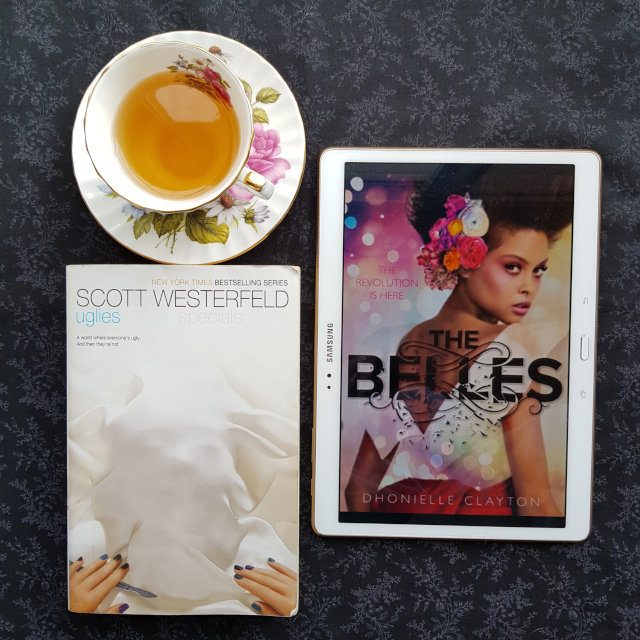
Since the launch of The Belles earlier this year, Dhonielle Clayton has been very open about taking inspiration from Uglies by Scott Westerfeld. Today I’m over at the Skiffy and Fanty Show, taking a look at the way these two books form an interesting dialogue, with The Belles building on the foundation formed by Uglies while bringing a somewhat more nuanced and feminine perspective.

Facebooktwittergoogle_pluspinterest

Mirrored from Earl Grey Editing.

calissa: A low angle photo of a book with a pair of glasses sitting on top. (Mt TBR)

PHOTO by Greg Rakozy on Unsplash. QUOTE from The Long Way to a Small Angry Planet by Becky Chambers

November was SciFiMonth, a reading/media challenge run by Imyril of x+1 and Lisa of Dear Geek Place. The idea is to use the occasion as an excuse to consume all the science fiction you’ve been meaning to get to. Since I did so well with the RIP XIII reading challenge over September and October, I thought I’d keep the ball rolling with SciFiMonth.

Except it didn’t work out that way at all. It turns out that while my reading on any given month varies wildly from year to year, November is the one month I consistently read less. I’m still not entirely sure why that is; NaNoWriMo isn’t something I engage in regularly (and didn’t do this year). At a guess, I would say it had to do with Christmas preparations and the headlong race to the end of the year.

Whatever the case, I didn’t end up reading much for the month of November and only a small portion of it was science fiction:

Knight Errant by KD Sarge. Really a m/m romance in a sci-fi setting. Taro is a former con artist trying to go the straight and narrow to make his adopted sister proud. Unfortunately, Rafe, his sister’s new passenger and old flame, is making that difficult. When Taro tries to get rid of Rafe, the two end up getting captured, then crash land on a deserted planet where everything is trying to kill them. Of course, shenanigans ensue. A decent enough read, but I don’t think it successfully managed to straddle the line between genres.

Scourge of the Seas of Time (and Space) edited by Catherine Lundoff. An anthology of pirate stories. A lot of these were fantasy, but there were definitely some space pirates. Review forthcoming.

Peace Force by Simon Haynes. A YA sci-fi. Harriet Walsh is a terrible candidate for the Peace Force, but she’s broke and about to be evicted. When she answers a recruitment letter, she discovers the Peace Force need her help more than she thought. Read for the Aurealis Awards, so I won’t be giving any further thoughts.

I also reviewed Icefall by Stephanie Gunn, a story about mountineering in space that I highly recommend.

All in all, not the most inspired of efforts. I think that in the future I’ll avoid reading challenges for the month of November.


Facebooktwittergoogle_pluspinterest

Mirrored from Earl Grey Editing.

calissa: A low angle photo of a book with a pair of glasses sitting on top. (Mt TBR)

Ignite the Stars, Maura Milan, Earl Grey Editing, books and tea, tea and books

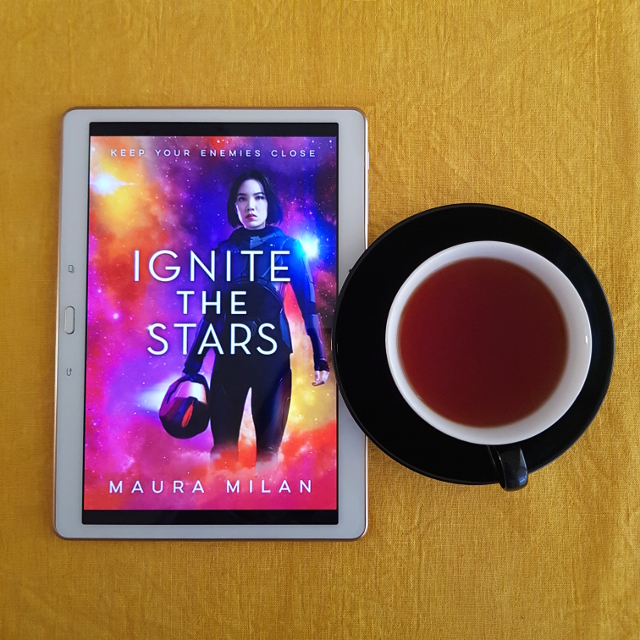
This week I’m over at the Skiffy and Fanty Show with a review of Ignite the Stars by Maura Milan. This sci-fi YA is a fun, action-packed adventure, but one which could have dug a bit deeper. (Hard to go past that cover, though!)

Mirrored from Earl Grey Editing.

calissa: A low angle photo of a book with a pair of glasses sitting on top. (Mt TBR)

Murder on the Titania, Alex Acks, Queen of Swords Press, Earl Grey Editing, tea and books, books and tea

Published: April 2018 by Queen of Swords Press
Format reviewed: E-book (mobi)
Series: The Adventures of Captain Ramos and Her Valiant Crew #1
Genres: Mystery, science fiction, alternate history, steampunk
Source: Publisher
Available: Amazon ~ Barnes & Noble ~ Book Depository ~ Booktopia~ Kobo ~ Smashwords

Disclaimer: I was provided with a free copy of this book in exchange for an honest review.

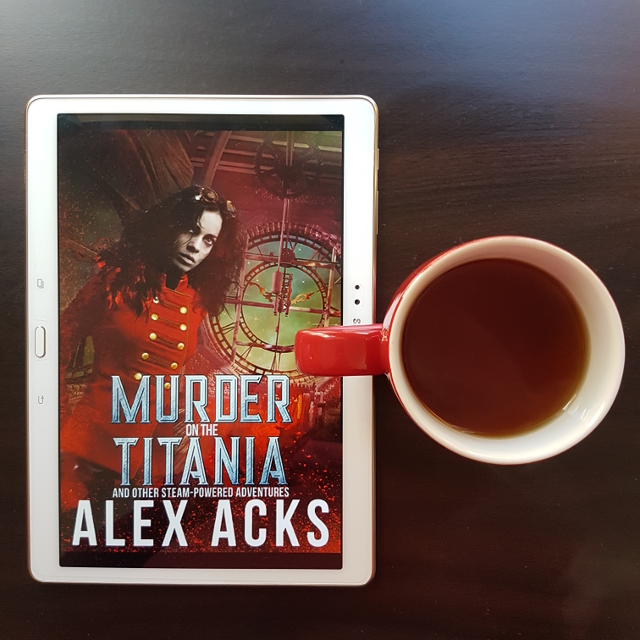
Captain Marta Ramos, the most notorious pirate in the Duchy of Denver, has her hands full between fascinating murder mysteries, the delectable and devious Delilah Nimowitz, Colonel Geoffrey Douglas (the Duke of Denvers new head of security), a spot of airship engineering and her usual activities: piracy, banditry and burglary. Not to mention the horror of high society tea parties. In contrast, Simms, her second in command, longs only for a quiet life, filled with tasty sausages and fewer explosions. Or does he? Join Captain Ramos, Simms and their crew as they negotiate the perils of air, land and drawing room in a series of fast-paced adventures in a North America that never was.

Murder on the Titania and Other Steam-Powered Adventures includes 4 novellas and a short story about piracy, banditry, burglary, jail-breaking, several brilliant bits of detective work and all manner of otherwise lawless hijinks performed by the valiant Captain Ramos and her crew.

Take Sherlock Holmes. Make him a Latina railcar pirate in a steampunk Denver where the dead are at risk of rising again and you have Murder on the Titania.

The work of Sir Arthur Conan Doyle and Agatha Christie is often peppered with bigoted stereotypes. Murder on the Titania subverts those elements in a way that’s delightful to read. This is probably most in evidence in the first (and titular) story of the collection. In this story, Colonel Geoffrey Douglas is charged with transporting some valuable jewellery from the Duchy of New York to home in the Duchy of Denver. A murder takes place while the airship is en route and the Colonel is called upon to investigate. It’s a bit of an oblique introduction to Captain Ramos, but one that works through contrast. Geoff is by no means stupid–his intelligence was one of the things I enjoyed about the character. However, his biased assumptions blind him to investigative possibilities. The racism of Holmes is absent–indeed, PoC are present and an unremarked upon part of the world–but the characters share some similar biases regarding women and class.

Captain Ramos is more open-minded. On the surface, she doesn’t have much in common with the famous detective. However, she does share a few of his other traits, such as a horror of boredom and an apparent disregard for personal safety. Much like Holmes, she remains a fairly enigmatic character; while we do get some scenes from her perspective, the third-person viewpoint keeps some distance. More of the story is told from the perspective of her Watson, a red-headed man from the working classes by the name of Simms. He plays the long-suffering sidekick who claims a desire for a quiet life, but not-so-secretly enjoys the thrill of an adventure.

The structure of the book works well. The first two novellas and the short story are each self-contained episodes about a discrete mystery. The third novella brings back a couple of characters and advances the worldbuilding in a way I found particularly satisfying. It’s in this story that we get to see Ramos with her crew, an experience made all the more delightful by seeing them do what they do best–robbing trains. It would have been nice to see more of the team and I have hopes for future books. The last novella brings us full circle back to the airship Titania, making it a nice way to round out the collection.

I’m not much of a mystery reader, more for lack of time than lack of desire. So, I might not be the best judge in relation to the mystery elements of the story. However, I found some aspects a bit predictable. This didn’t in any way detract from my enjoyment of the book, especially since it took place in such an interesting setting.

All in all, I found Murder on the Titania to be a fun read that does a wonderful job of paying homage to Sherlock Holmes while simultaneously subverting its problematic elements. I very much hope to see more in the future.

Facebooktwittergoogle_pluspinterest

Mirrored from Earl Grey Editing.

calissa: A low angle photo of a book with a pair of glasses sitting on top. (Mt TBR)

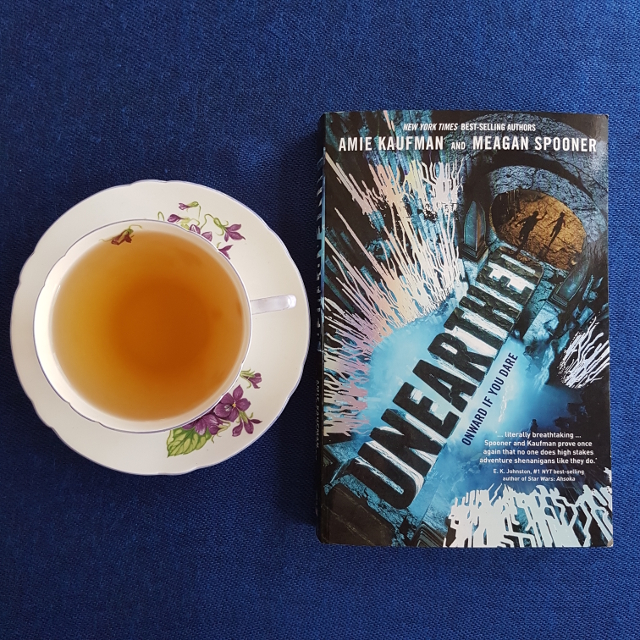
Unearthed, Amie Kaufman, Meagan Spooner, Earl Grey Editing, books and tea, tea and books

Published: December 2017 by Allen & Unwin
Format reviewed: Paperback, 331 pages
Series: Unearthed #1
Genres: Science fiction, YA romance, action adventure
Source: Harry Hartog
Reading Challenges: Australian Women Writers Challenge 2018, Beat the Backlist
Available: Publisher (print only) ~ Abbey’s ~ Amazon ~ Barnes & Noble ~ Book Depository ~ Booktopia ~ Dymocks ~ Kobo

When Earth intercepts a message from a long-extinct alien race, it seems like the solution the planet has been waiting for. The Undying’s advanced technology has the potential to undo environmental damage and turn lives around, and Gaia, their former home planet, is a treasure trove waiting to be uncovered.

For Jules Addison and his fellow scholars, the discovery of an alien culture offers unprecedented opportunity for study… as long as scavengers like Amelia Radcliffe don’t loot everything first. Mia and Jules’ different reasons for smuggling themselves onto Gaia put them immediately at odds, but after escaping a dangerous confrontation with other scavvers, they form a fragile alliance.

In order to penetrate the Undying temple and reach the tech and information hidden within, the two must decode the ancient race’s secrets and survive their traps. But the more they learn about the Undying, the more their presence in the temple seems to be part of a grand design that could spell the end of the human race…

Inspired by Lara Croft and Indiana Jones, Unearthed is a fun, action-packed adventure. It takes these adventuring archetypes, turns them into teenagers and puts them on a new planet, then adds a hefty dose of romance.

At first glance, the main characters are pretty stereotypical, but both are given a bit of a twist that brings more dimension to them. Mia is an experienced scavenger who has earned a living through pillaging abandoned cities on an Earth ravaged by climate change. She’s a street rat with limited education… and a passion and talent for mathematics. And while she’s all about the money, it’s really just a means to an unselfish end. Jules is the bookish one. He knows at least half a dozen language and not much about what it takes to survive in a hostile environment. However, he is somewhat athletic and even though he’s not exactly street smart, he’s not an idiot, either.

There is a strong focus on the relationship between these characters. They have competing agendas and aren’t exactly forthright with each other; trust is an issue that crops up multiple times. Some readers may feel their relationship develops a bit quickly, considering the entire book takes place over just a couple of days. However, I found it well paced in terms of the story’s arc. There are things that immediately attract them to each other, but it takes some time to overcome their distrust of each other. The process is helped along by the fact they must rely on each other to survive.

The story has a very visual style that plays out rather like a movie. There are some spectacular landscapes and the temple offers some interesting set pieces as the pair traverse the puzzle chambers.

While the book touches on a few issues–such as climate change, corruption and human greed–it’s not an overly deep book. It’s more of a fun, fast-paced thriller. And while most of the characters (even the minor ones) manage to avoid stereotypes, they don’t exactly surprise. Mia and Jules act pretty much as expected. The villains, both major and minor, are particularly flat. They receive little characterisation and mostly serve to add pressure to the situation.

However, overall I enjoyed Unearthed. Be warned: it ends on a terrible cliffhanger.

Mirrored from Earl Grey Editing.

calissa: A low angle photo of a book with a pair of glasses sitting on top. (Mt TBR)

Published: January 2018 by Tor.com
Format reviewed: E-book (mobi)
Series: Binti #3
Genres: Science fiction
Source: NetGalley
Available:Abbey’s ~ Amazon ~ Barnes & Noble ~ Book Depository ~ Booktopia ~ Dymocks ~ Kobo

Disclaimer: I was provided with a free copy of this book in exchange for an honest review.

Binti has returned to her home planet, believing that the violence of the Meduse has been left behind. Unfortunately, although her people are peaceful on the whole, the same cannot be said for the Khoush, who fan the flames of their ancient rivalry with the Meduse.

Far from her village when the conflicts start, Binti hurries home, but anger and resentment has already claimed the lives of many close to her.

Once again it is up to Binti, and her intriguing new friend Mwinyi, to intervene–though the elders of her people do not entirely trust her motives–and try to prevent a war that could wipe out her people, once and for all.

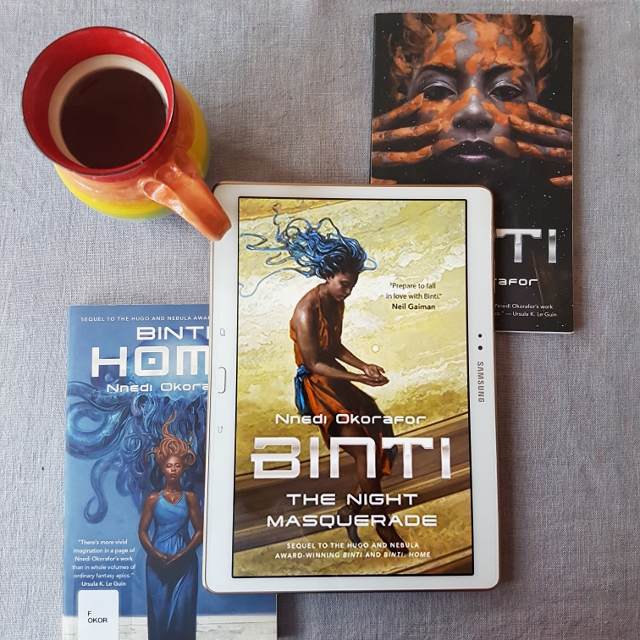
Binti: The Night Masquerade is the conclusion to Nnedi Okorafor’s spellbinding series of novellas. It follows directly on from Binti: Home, which may come as a relief to readers anxious about the cliff-hanger ending.

There’s a lot packed into this novella, which is reflective of the many identities with which Binti is coming to terms. It’s a story that put me in mind of the lines from Walt Whitman’s “Song of Myself”: Do I contradict myself?/ Very well, I contradict myself;/ (I am large, I contain multitudes.) Like the poem, Binti contains many identities, with each book adding more. These identities don’t always sit easily together; in The Night Masquerade, we see more of how the angry, warlike Meduse part of Binti conflicts with her identity as a harmonizer. We also see Binti exploring her heritage as one of the Desert People, a minority she has been taught to look down on. These conflicting identities make Binti a complex and interesting character. One of my favourite things about this book was the way Binti isn’t above reproach. She has flaws, makes assumptions and mistakes. However, she learns from these and strives to do better and treat others with respect.

This internal exploration is balanced with external conflict, as fighting between the Khoush and the Meduse breaks out once more. This aspect of the book touches on themes of good faith and the impact large warring forces have on the individuals around them (and vice versa). It’s a violent story, but this is in keeping with the series–particularly the first book.

The settings throughout the book were evocative, forming characters in their own right. The desert in particular has a wonderful presence, conveying the sense of home Binti feels.

There were a number of twists in the last third of the book. Not all of them worked for me, though I did find them thought-provoking.

Overall, Binti: The Night Masquerade was a satisfying conclusion to what has been a fascinating trilogy.

Facebooktwittergoogle_pluspinterest

Mirrored from Earl Grey Editing.

calissa: A low angle photo of a book with a pair of glasses sitting on top. (Mt TBR)

Sunvault, Phoebe Wagner, Bronte Christopher Weiland, solarpunk, Upper Rubber Boot Books, Earl Grey Editing, tea and books, books and tea

Published: August 2017 by Upper Rubber Boot Books
Format reviewed: E-book (mobi)
Genres: Science fiction
Source: NetGalley
Available: Amazon ~ Barnes & Noble ~ Book Depository ~ Booktopia ~Kobo

Disclaimer: I was provided with a free copy of this book in exchange for an honest review.

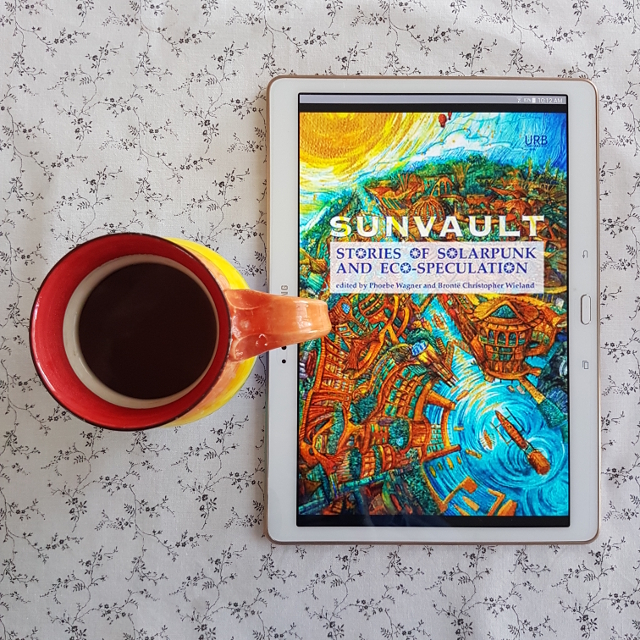
Sunvault: Stories of Solarpunk and Eco-Speculation is the first anthology to broadly collect solarpunk short stories, artwork, and poetry. A new genre for the 21st Century, solarpunk is a revolution against despair. Focusing on solutions to environmental disasters, solarpunk envisions a future of green, sustainable energy used by societies that value inclusiveness, cooperation, and personal freedom.

Edited by Phoebe Wagner and Bront Christopher Wieland, Sunvault focuses on the stories of those inhabiting the crucial moments when great change can be made by people with the right tools; stories of people living during tipping points, and the spaces before and after them; and stories of those who fight to effect change and seek solutions to ecological disruption.

Contributors include Elgin Award nominee Kristine Ong Muslim, New York Times bestselling author Daniel Jos Older, James Tiptree, Jr. Award winner Nisi Shawl, World Fantasy Award winner Lavie Tidhar, and Lambda Literary Awards finalist A.C. Wise, as well as Jess Barber, Santiago Belluco, Lisa M. Bradley, Chloe N. Clark, Brandon Crilly, Yilun Fan and translator S. Qiouyi Lu, Jaymee Goh, Jos M. Jimenez, Maura Lydon, Camille Meyers, Lev Mirov, joel nathanael, Clara Ng, Sara Norja, Brandon OBrien, Jack Pevyhouse, Bethany Powell, C. Samuel Rees, Iona Sharma, Karyn L. Stecyk, Bogi Takcs, Aleksei Valentn, T.X. Watson, Nick Wood, and Tyler Young.

Sunvault is a robust and enjoyable anthology with strong ideas and a large dose of hope.

Variety is a key feature of this anthology and one that cropped up in a number of ways. The inclusion of poetry and artwork was a refreshing touch. It was nice to see these forms taken seriously in the anthology’s survey of solarpunk.

The works within the anthology come from an impressive range of cultures. There was a Chinese work in translation alongside stories from Jewish and African American creators, among others. There was also work that centred disabled characters in ways sometimes reminiscent of Defying Doomsday. All of this led to a wonderful plethora of visions of the future, as well as variety in the tone of the stories. That said, hope for the future is a key element of solarpunk. There are no stories here that are unremittingly bleak, even if hope remains slim in some–such as C. Samuel Rees’s Terratology. These works tend to celebrate the tenacity of humanity and our ability to come together and find solutions.

Naturally, there are stories in this anthology that are primarily focused on ideas, rather than characters and relationships. This is not generally my cup of tea, but I found the ideas interesting enough to keep me reading. Worldbuilding is a strength of most of the works in this collection, with some offering visions of the future that are more practical than others. Throughout, there is a nice balance with works that are more emotive.

Some highlights of the anthology for me were Daniel Jose Older’s Dust about a genderfluid protagonist with a special connection to an asteroid hurtling towards the Earth. It deftly blended ideas and character, with a wonderful emphasis on connection to place. Similarly, Lev Mirov’s The Desert, Blooming brought together religion and science in a beautiful combination, as the protagonist leaves the dome under which they have grown up for the first time to help plant trees to reclaim the desert.

All in all, Sunvault is an anthology that has been skilfully pieced together and I highly recommend it, particularly for those looking to get an overview of this subgenre.

Facebooktwittergoogle_pluspinterest

Mirrored from Earl Grey Editing.

calissa: (Calissa)

A Closed and Common Orbit, Becky Chambers, Wayfarers, science fiction, sci-fi

Published: October 2016 byHodder & Stoughton
Format reviewed: E-book (mobi)
Series: Wayfarers #2
Genres: Science fiction
Source: NetGalley
Available: Publisher (print) ~ Abbey’s ~ Amazon ~ Barnes & Noble ~ Book Depository ~ Booktopia ~ Dymocks ~ Kobo

Disclaimer: I was provided with a free copy of this book in exchange for an honest review.
This review contains spoilers for previous books.

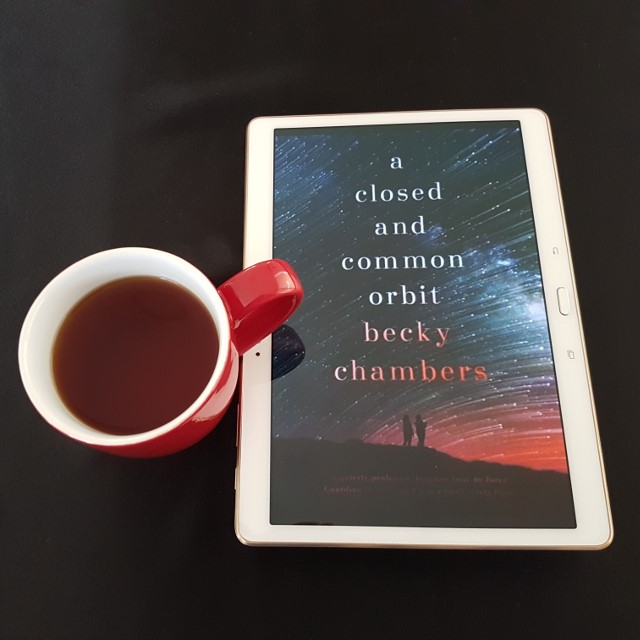
Lovelace was once merely a ship’s artificial intelligence. When she wakes up in an new body, following a total system shut-down and reboot, she has no memory of what came before. As Lovelace learns to negotiate the universe and discover who she is, she makes friends with Pepper, an excitable engineer, who’s determined to help her learn and grow.

Together, Pepper and Lovey will discover that no matter how vast space is, two people can fill it together.

I hadn’t read The Long Way to a Small, Angry Planet when I picked up this review copy of A Closed and Common Orbit, though I’d heard a lot about it. Although the blurb claimed A Closed and Common Orbit was a stand-alone sequel, I’m pretty particular about spoilers. I side-eyed the statement, then went and borrowed a copy of The Long Way to a Small, Angry Planet from the library. I promptly devoured it, shoved it into the arms of my sci-fi-newbie sweetheart, then dove into this sequel.

It was equally as awesome but in a different way.

I will admit it does stand alone very well. It takes two minor characters from the previous book and tells their stories. The premise of A Closed and Common Orbit involves a spoiler for The Long Way to a Small, Angry Planet, so if you care about that sort of thing I’d highly recommend starting with the first book (actually, I’d recommend that anyway). I also feel the major alien species involved in this universe get a clearer and more gradual introduction in the first book. However, by and large, it works as a starting point.

Lovelace used to be The Wayfarer‘s AI. At the end of the previous book, her memory is damaged and she has to be rebooted. She wakes up with no recollection of who she once was. To mitigate the grief of the crew, a visiting mechanic, Pepper, invites Lovelace to inhabit an artificial body she has on hand. The two then return to the planet where Pepper has made a life.

A Closed and Common Orbit offers a number of contrasts to the previous book. The Long Way to a Small, Angry Planet followed an ensemble cast on their journey through space. While it dealt to some extent with identity, the focus was more on cultural differences and how they play out on both the macro and micro scales. A Closed and Common Orbit is a much more intimate book. The cast is smaller, the majority of the action takes place on the surface of two planets, and the focus is on personal identity.

AIs in humanoid bodies are banned, placing great pressure on Lovelace to pass as human or risk destruction. One of the first things she needs to do is choose a name. The significance of names to identity is reinforced by the story’s structure. Each chapter is headed up with the name of the focus character. When Lovelace decides her name is Sindra, the narrative respects this and refers to her by that name rather than continuing to call her by the old one. In this way, the story models good behaviour.

Passing as human is no easy thing for Sindra. There are similarities here to Breq from Ancillary Justice: both have difficulty getting used to being in a singular body and keep reaching for connections that are no longer there. However, Breq was somewhat used to being in a humanoid body through her ancillaries, whereas the experience is completely alien to Sindra. Her difficulties were well thought out and I felt they were portrayed in a convincing way.

While there are a number of differences between the Wayfarer books, there are also a number of similarities. The multipleclose third-person perspectives are supplemented by fictional documents, though to a lesser extent than the previous book. There are also paragraphs where characters offer philosophical views. While I found these interesting, they didn’t sit quite as comfortably with me as in the first book, perhaps because their repeated use began to give a sense of it being more of an intrusion from the author than arising naturally from the character.

The books also share a theme of found family. Indeed, the theme is stronger in A Closed and Common Orbit as we watch Pepper effectively raise Sindra while we simultaneously read Pepper’s story of being raised by AIs. And the diversity that helped make The Long Way to a Small, Angry Planet such an awesome book continues. This manifested in ways big and small. I particularly appreciated Blue’s stutter and the way an explanation was neither offered nor necessary.

Overall, A Closed and Common Orbit was just as excellent as its predecessor, albeit in a different way. I’ll certainly be buying my own copy of both books.

Facebooktwittergoogle_pluspinterest

Mirrored from Earl Grey Editing.

calissa: (Calissa)

21091693

Published: October 2014 by Orbit
Format reviewed: Paperback, 356 pages
Series: Imperial Radch #2
Genres: Science fiction
Source: Gift
Reading Challenges: The 2016 Sci-fi Experience, #ReadMyOwnDamnBooks
Available: Publisher (print and electronic) ~ Abbey’s ~ Amazon ~ Barnes & Noble ~ Book Depository ~ Booktopia ~ Dymocks ~ Kobo ~ Smashwords

Disclaimer: This review contains spoilers for previous volumes/books.

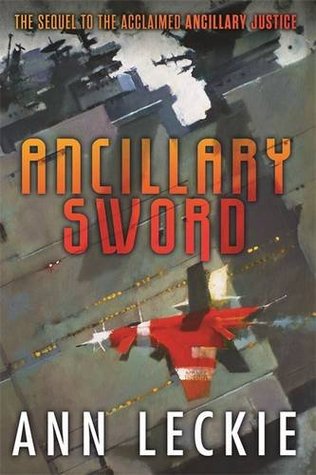
Breq is a soldier who used to be a warship. Once a weapon of conquest controlling thousands of minds, now she only has a single body and serves the emperor she swore to destroy.

Given a new ship and a troublesome crew, Breq is ordered to the only place in the galaxy she will agree to go: Athoek station, to protect the family of a lieutenant she once knew – a lieutenant she murdered in cold blood.

This is a book all about tea, so it should surprise no one that I loved it. Okay, perhaps that’s oversimplifying things a little. After all, Ancillary Sword is a complex novel.

It picks up within a few days of where Ancillary Justice left off. Having been promoted to the rank of Fleet Captain by Anaander Mianaai (or one version, at any rate), Breq is sent to Athoek Station to keep that system stable. Although the system has little strategic value, it is a major producer of the tea on which the empire runs.

If that sentence rings some colonial bells for you, it should. The cultivation of tea on Athoek relies in a large part on systemic inequality and oppression, much like it did and continues to do in reality. In Radch the kind of tea one drinks and the quality of the tea service one uses is tied intimately to status. But when you’re the last surviving incarnation of a warship’s AI–one who has seen every waking moment of every crew member, high-born and low–status doesn’t mean much.

Identity was a key theme of Ancillary Justice. Ancillary Sword is a slightly different beast. While it continues to grieve her, Breq is coming to terms with the fact she’s now an individual–albeit one who can connect to her ship in a unique way. The stability of Breq’s identity makes for a more linear story, one that isn’t split over two timelines and is therefore somewhat more comfortable for the reader. However, don’t be fooled into thinking this means you can relax your attention. There are new mysteries afoot and the more linear narrative doesn’t equate to transparent motives from the characters.

Injustice and inequality become the key themes, but interweave with the theme of identity rather than replacing it entirely. One common shortcoming in science fiction is the way any given planet only seems to be home to one race and one culture. Ancillary Sword messes with that by tying it to a colonialist attitude and racism; the high-born characters assume the same thing, conveniently oppressing minority cultures by erasing their existence. However, Breq doggedly acknowledges diversity and in doing so upsets the status quo.

Unsurprisingly, she also acknowledges the other AIs she encounters as entities in their own right and treats them with respect. This makes for an animistic world view that I found fascinating.

There is so much I found interesting in this novel that I could go on for hours. Instead, I will conclude by saying that Ancillary Sword is a story with depth, much like its predecessor. The pacing is perhaps a little slow at first, but, unlike Ancillary Justice, was quick to hook me in and doesn’t suffer from middle-book sag. Overall, it’s a thought-provoking read I highly recommend.

2016scifiexp400

Facebooktwittergoogle_pluspinterest

Mirrored from Earl Grey Editing.

calissa: (Calissa)

25892668

Published: July 2015 by M/M Romance Group @ Goodreads
Format reviewed: E-book (mobi)
Genres: Sci-fi, romance, fantasy
Source: M/M Romance Group @ Goodreads
Reading Challenges: #ReadMyOwnDamnBooks,The 2016 Sci-fi Experience
Available: Publisher (electronic)

When the crew of the Medical Explorer Juniper arrive at the space city of Caelestia, they are horrified to find it floating airless in space with thousands of its people dead. The only survivor is a cyborg gardener, Vairya, who has been left amnesiac and terrified, barely able to choke out a few words: “It could happen again.”

As ex-military doctor Reuben Cooper explores the illusory rose garden of Vairya’s memory, where Vairya himself flirts and hides among the flowers, he discovers a terrible threat, not just to the crew of the Juniper but to all humanity.

Can four doctors and a cyborg fight a merciless enemy that can kill with a touch?

I adore Amy Rae Durreson’s work and In Heaven and Earth has done nothing to deter me. This novella has all of Durreson’s trademarks–solid world building and a sturdy plot alongside a sweet romance.

The story gets off to a dynamic start with the crew of the Juniper investigating the aftermath of a planetary apocalypse but slows after the first scene under the weight of world building and back story. Fortunately, Durreson manages to deliver her exposition in a way that makes sense in terms of the situation and still keeps the action moving forward. By Chapter Two, the pace has picked up.

Although In Heaven and Earth is science fiction, Durreson is primarily a fantasy writer and it shows. The science is fairly light and verges on magic in a few places. There is also a couple of charming interludes in Vairya’s mind which he has shaped to resemblea fantasy world. While I had no problems with the fantasy elements(and actually enjoyed them quite a bit), it may not be your cup of tea if you prefer your sci-fi hard.

The plot itself kept me guessing and maintainedthe tension very nicely. Durreson does a great job of illustrating the desperation of the situation in which Reuben and Vairya find themselves, adding a wonderful bittersweetness to their developing relationship.

I was also charmed by the characters. Reuben has been damaged by past experiences that shook his faith in humanity. His relationship with the rest of the crew of the Juniper is uneasy and this is cleverly brought forth during Reuben’s adventures in Vairya’s mind. Vairya, on the other hand, retains a sweetness and a joy for life, despite being essentially immortal. I particularly enjoyed this subversion of the trope.

I’m so glad I saved this for my holiday reading because it meant that I was able to dive in and not come up for air until the end. If you’re a fan of sci-fi romance, you should definitely check out In Heaven and Earth.

2016scifiexp400

Facebooktwittergoogle_pluspinterest

Mirrored from Earl Grey Editing.

calissa: (Calissa)

22809098

Published:August 2014byTwelfth Planet Press
Format reviewed: Paperback, 450 pages
Genres:Speculative fiction, fantasy, science fiction, magical realism
Source:Bought directly from the publisher
Reading Challenges: Australian Women Writers Challenge 2015
Available:Twelfth Planet Press (print and electronic)~ Amazon ~ Book Depository ~ Booktopia ~ Kobo ~ Smashwords

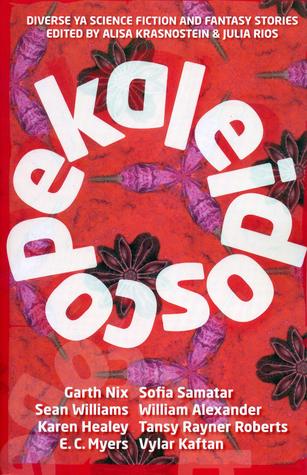
What do a disabled superhero, a time-traveling Chinese-American figure skater, and a transgendered animal shifter have in common? They’re all stars of Kaleidoscope stories! Kaleidoscope collects fun, edgy, meditative, and hopeful YA science fiction and fantasy with diverse leads. These twenty original stories tell of scary futures, magical adventures, and the joys and heartbreaks of teenage life. Featuring New York Times bestselling and award winning authors along with newer voices: Garth Nix, Sofia Samatar, William Alexander, Karen Healey, E.C. Myers, Tansy Rayner Roberts, Ken Liu, Vylar Kaftan, Sean Williams, Amal El-Mohtar, Jim C. Hines, Faith Mudge, John Chu, Alena McNamara, Tim Susman, Gabriela Lee, Dirk Flinthart, Holly Kench, Sean Eads, and Shveta Thakrar.

In April,Kaleidoscope won both the Ditmar Award and the Aurealis Award for Best Anthology and I can see why. Not only does it do some wonderful things with representation, all the stories are of excellent quality. As with any anthology, there were a few stories I was less keen on, but that was mostly a matter of personal preference.

Diversity is at the heart of this anthology in a number of ways. There are queer characters, characters who use wheelchairs, characters dealing with depression and chronic illnesses, characters from a range of ethnic backgrounds. In some cases the diversity is intersectional. For example, Faith Mudge’sSignature features Priya, a wheelchair-using protagonist who has brown skin. However, the characters’ diversity tends not to be the focus of the story. To continue with the example ofSignature, the story is about several characters who are caught in Faustian Bargains that have just come due. The diversity of the characters in this story is completely incidental to the plot–a part of who they are but not the whole of who they are. I loved this about the anthology.

Diversity also manifests in the tone of the stories, allowing for a nice range. Some of them were a little bit dark (Kiss and Kiss and Kiss and Tell by E.C. Meyers), some were heartbreaking (The Day the God Died by Alena McNamara). Others were fun and full of hope (Cookie Cutter Superhero by Tansy Rayner Roberts,Signature). I was pleased to see some magic realism included along with more traditional fantasy and science fiction.Ordinary Things by Vylar Kaftan hardly reads as speculative at all, while inKrishna Blue Shveta Thakrar uses magical realism (and some gorgeous language) to excellent effect. Of them all,Careful Magic by Karen Healey was my favourite. In this magical society, magic users declare themselves for Order or Chaos. Helen is a rare Order magic user and one who lives with Obsessive-Compulsive Disorder. One day her careful routine is interrupted by a classmate who needs help lifting a love spell.

One concern I had about the anthology was the use of the descriptor “disabled” on the back cover. I had been under the impression that this was offensive (or, at the very least, distasteful) to certain parties and could serve to undermine the anthology’s intended purpose. If any readers have thoughts on this topic, I would love to hear them, especially because this is a trend I have noticed continuing in the promotional material forDefying Doomsday.

However, overall I foundKaleidoscope an excellent anthology and well-deserving of the awards it has received.

Facebooktwittergoogle_pluspinterest

Mirrored from Earl Grey Editing.

Profile

calissa: (Default)
Calissa

September 2022

S M T W T F S
    123
45678910
11121314 151617
18192021222324
252627282930 

Syndicate

RSS Atom

Most Popular Tags

Style Credit

Expand Cut Tags

No cut tags
Page generated Feb. 11th, 2026 12:50 pm
Powered by Dreamwidth Studios